


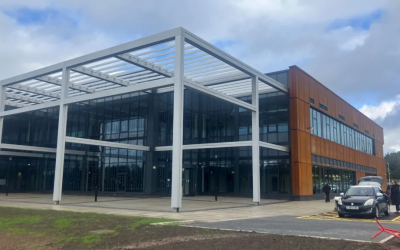
VASO Global is set to start production of its first line of high-performance structural composite panels, made from recycled glass, at a new 60,000 sq ft factory in Dumfries, giving UK housebuilders a lower-carbon alternative to concrete and steel as the company works towards three production lines.
Six jobs have already been created at the site as part of 15 roles filled so far, led by manufacturing and engineering manager Jim Patterson, who brings 35 years' experience from production roles at ICI and DuPont, including as deputy site manager responsible for 150 staff.
The first VASO panel is due off the production line later this month, with a demonstration home planned for September. Patterson is working alongside chief technical officer Simon Parrish to commission the line and reduce construction site waste.
VASO Global, part of Eco Group, designs, develops and manufactures structural composite panels from recycled glass for modular, low-carbon housing. The company secured more than £5m in funding from PXN Ventures, Scottish Enterprise, Innovate UK Loans and Eco Group, which will act as delivery partner for VASO's initial build projects, expected to support up to 70 jobs at the Dumfries site within five years.
Jim Patterson said: "VASO is a hugely exciting opportunity." He said working on a project that will transform how homes and buildings are constructed is a rewarding experience, and that seeing new recruits excited about the product and its potential gives the team a real boost.
The move reflects growing momentum behind offsite, low-carbon composite manufacturing as a route to scale UK housing delivery without relying solely on traditional brick-and-block supply chains.
The timing follows the Scottish Government's 2024 declaration of a national housing emergency, and sits alongside UK-wide commitments including a £39bn Affordable Homes Programme and a National Housing Bank targeting £53bn in private housebuilding investment.
For the sector, a manufacturing model built on converting waste glass into structural panels gives building product suppliers a circular-economy narrative that increasingly matters in public sector and social housing procurement.
The wider signal for the sector is that modular composite panel manufacturing is moving from pilot demonstration into live factory production, testing whether offsite systems can scale fast enough to dent the UK's housing shortfall.
Source: Construction UK Magazine / The Construction Index / Fenestration News / Black Backs Building







.png)