
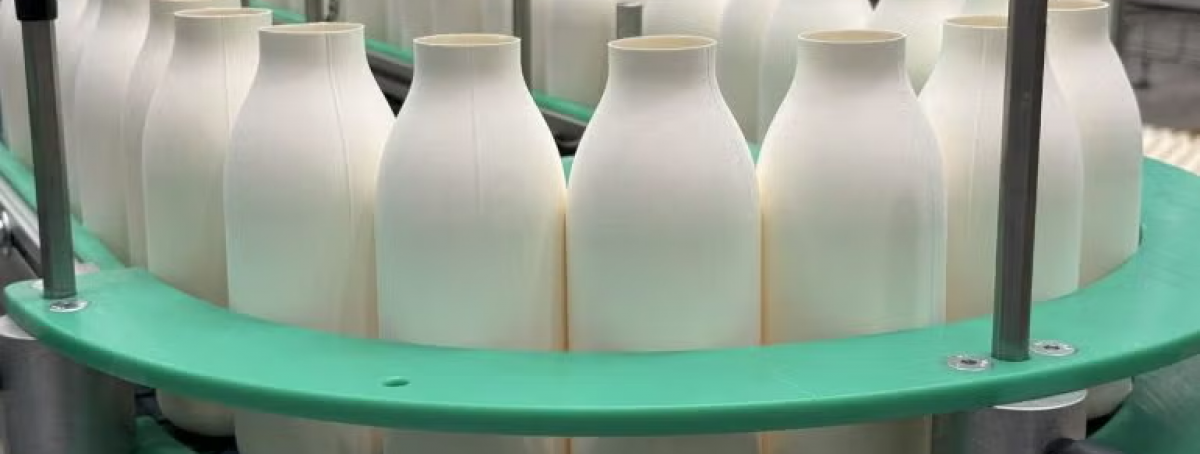
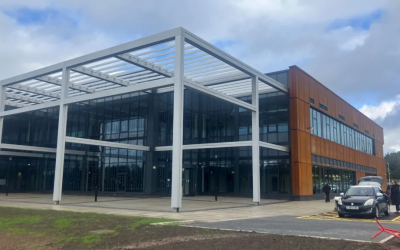
Pulpex has opened its first commercial-scale fibre bottle manufacturing plant near Glasgow, moving the technology from pilot-scale development to commercial production and giving packaging manufacturers a reference site for licensed production of paper-based alternatives to plastic and glass.
The plant has initial capacity of up to 40 million units a year, with a long-term goal of one billion units, and has created 39 skilled manufacturing jobs; more than 90 per cent of the initial capacity available this financial year has already been sold.
Customers include smol, which is introducing the fibre bottles into liquid laundry, and Purely Scottish Natural Mineral Water, which plans to launch natural mineral water in them; the bottles are made from sustainably sourced wood pulp, contain no hidden plastic and are designed for household paper recycling.
Under its Manufacture under License model, Swiss paper manufacturer Perlen Industrieholding holds exclusive manufacturing rights across Switzerland, Austria, Italy and southern Germany, while India-based Alternicq has exclusive market development rights across India and the Gulf Cooperation Council.
Pulpex, launched in 2020 as a collaboration between Pilot Lite, Diageo and a group of global consumer goods companies, develops recyclable fibre bottles; the plant is supported by the National Wealth Fund and the Scottish National Investment Bank, which led its $78 million Series D round in 2025.
Scott Winston, managing director and chief science and sustainability officer at Pulpex, said Glasgow is the first step towards one billion units globally and fits the UK Industrial Strategy’s focus on innovation-led manufacturing. Sandy Westwater, CEO of Pulpex, said the opening marks the moment the company moves from proving the technology to proving the industrial model.
The launch comes as packaging and recyclability requirements tighten under the EU Packaging and Packaging Waste Regulation and the UK’s Extended Producer Responsibility regime, creating demand for fibre alternatives.
For the sector, Pulpex’s licensing model, with Glasgow as reference plant and regional partners producing closer to customers, lets brand owners adopt new packaging without becoming manufacturers.
The wider signal for the sector is that public development capital is underwriting first-of-a-kind packaging plants, with more than 90 per cent of initial capacity sold before commercial output scales.
Source: ESG Today / Packaging Insights / PR Newswire





.png)