
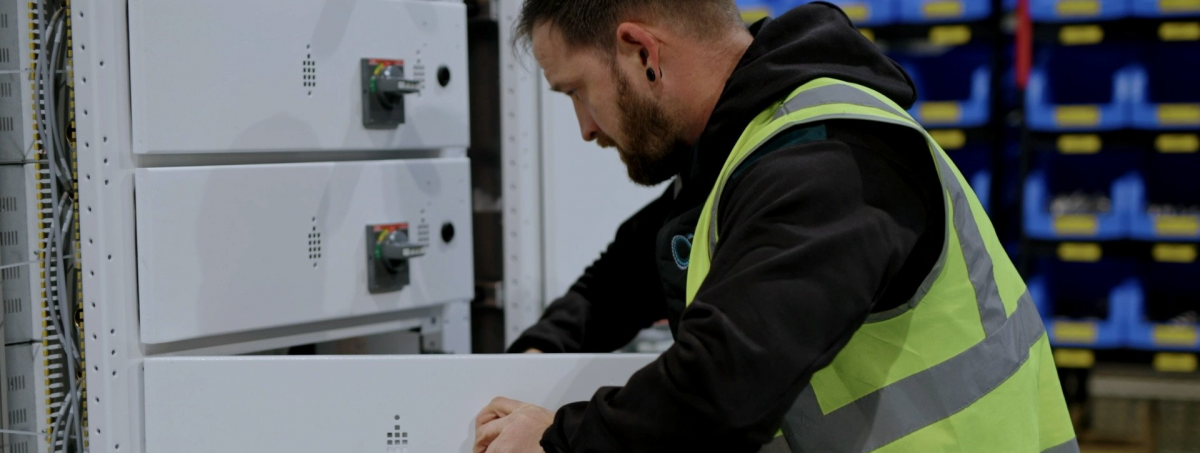
TES Power has invested more than £5m in sheet metal fabrication technology at its Ballykelly campus in Northern Ireland, giving data centre builders a manufacturer able to take products from raw material to finished assemblies in one facility as demand for modular power systems rises.
Over the past four years the company has grown from a small switchgear manufacturer into a builder of modularised data centre power train solutions, and has tripled its workforce to more than 200 employees in the last 18 months as offices and manufacturing capacity expand.
TES delivers complete modularised power distribution solutions, with design, manufacturing, engineering and project delivery under one roof, as data centre builders increasingly want integrated systems instead of individual products from an industry set to add close to 100 GW of new capacity by the end of the decade.
TES Power, part of Cookstown-headquartered TES Group, is a Northern Ireland manufacturer of low-voltage switchgear and modular electrical rooms; the group was recently acquired by French electrical infrastructure group Legrand, and has grown to more than 300 employees with revenues of £72m.
Michael Beagan, managing director of TES Power, said: “Traditional data centers used to be constructed. Now they’re manufactured.” He said modular rooms are now what everyone in the industry is talking about, and James Peacock, chairman of TES Power, said modular factory builds mean a site needs about 200 people rather than 1,000.
The expansion reflects the shift from site-built to factory-built data centre power, with TES testing switchgear on mini skids before lifting units into main skids that need only a few workers.
The timing follows Legrand’s acquisition, with the new 300,000 sq ft Co Derry campus built to meet increasing global demand for power distribution systems and a plan to double employment within the next couple of years.
For the sector, a Northern Ireland manufacturer selling to European developers without Brexit-related trade barriers shows how regulatory access can underpin equipment exports.
The wider signal for the sector is that data centre power equipment is moving into vertically integrated factories, with fabrication, testing and project delivery brought in-house to control quality and schedule.
Source: Data Centre Solutions / Irish Manufacturing / Techzine / The News Letter





.png)