

Nestlé UK has scaled its use of spent coffee as biomass fuel at its Tutbury manufacturing facility, generating 47 per cent of the site's total steam requirements in 2025, giving energy-intensive food and drink manufacturers a working example of how process byproducts can offset fossil fuel boiler demand without external feedstock procurement.
The programme has cut waste sent to landfill by 94 per cent since 2024, with the Tutbury site now using 97.7 per cent of spent coffee beans as fuel. The process involves pressing spent beans to remove moisture before feeding the dried material into a biomass boiler, with the resulting steam fed directly into Nescafé production in a closed-loop system.
Tutbury has recycled spent coffee since 2015, but conversion to biomass fuel generation marks a significant step change; the site already recycles around 50,000 tonnes of spent coffee grounds a year. Mike Parr, industrial services manager at Tutbury, said incremental efficiency and waste reduction gains compound significantly across large manufacturing sites, and that the programme has prompted evaluation of additional feedstocks, particularly cocoa husks.
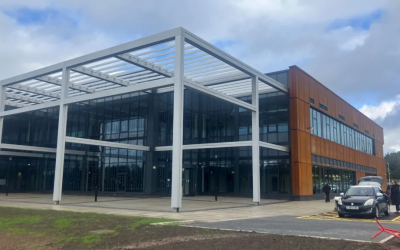
Nestlé, headquartered in Vevey, Switzerland, is the world's largest food and drink company; its Tutbury site has received more than £350m in investment since 2011 and employs more than 710 people as a global Coffee Centre of Excellence producing Nescafé for export to more than 70 markets.
The move reflects a wider trend among beverage and food manufacturers with high thermal energy demand to evaluate process byproducts as biomass feedstocks, particularly where infrastructure for moisture removal and boiler integration already exists on site.
The approach sidesteps competitive pressure building across external biomass supply, with UK wood pellet consumption forecast to reach a record 10.35 million tonnes in 2026, tightening feedstock availability for manufacturers reliant on procured biomass.
For the sector, a single-stream byproduct model avoids the logistics complexity and price exposure of external biomass procurement, a distinction that matters as competing demand tightens supply across the wider bioenergy market.
The wider signal for the sector is that on-site energy generation from process byproducts is becoming a standard decarbonisation lever for large manufacturers, offering a route to material emissions reductions without new capital-intensive external supply contracts.
Source: Bioenergy Insight Magazine / Nestlé UK






.png)