
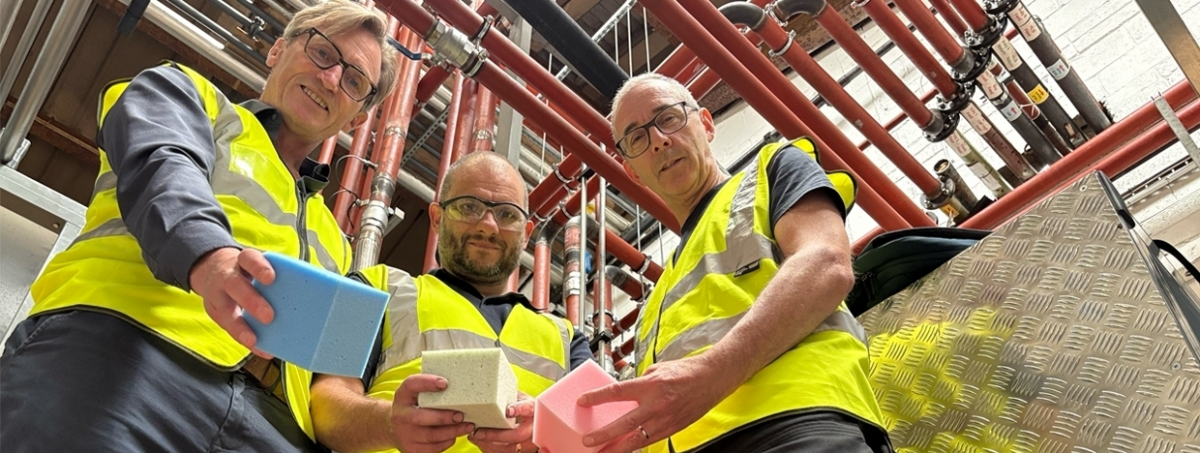
Kaymed has completed a £3m transformation programme across its Dublin and Kilcullen sites, giving UK and Ireland bedding retailers a domestic manufacturing partner with upgraded automation, traceability and sustainability credentials as customers weigh supply chain resilience alongside price.
At the centre of the programme is a £2.7m investment in a new continuous PU foam pour line at Kaymed's Dublin facility, adding automation, real-time monitoring and enhanced traceability. Kaymed said the line improves product consistency while cutting waste by almost 2 per cent and energy use by around 3.6 per cent.
A further £350,000 has gone into foam compression and roll-packing equipment delivering up to eight times better load yields, cutting shipping volumes and emissions. Kaymed has also implemented a new Advanced Planning and Scheduling platform giving end-to-end visibility from foam production through to finished mattresses.
Alongside the equipment, Kaymed has made 14 specialist appointments over the past year spanning engineering, supply chain, planning and laboratory roles, and now employs 250 people of 26 nationalities across its two sites.
Kaymed, formerly Kayfoam Woolfson, is a Dublin and Kilcullen-based foam and mattress manufacturer acquired by US bedding components group Leggett & Platt in 2021 for around $119m; it owns brands including Kayfoam, King Koil, Odearest and iGel.
MD Aiden Costello said the investments across people, technology and manufacturing strengthen every part of Kaymed's innovation platform, and that combined with Leggett & Platt's spring expertise, the company can create sleep products competitors cannot replicate.
The investment reflects a wider push among vertically integrated bedding manufacturers to defend margins through automation and traceability, as retailers weigh domestic supply against continued growth in lower-cost imports.
The timing is notable given UK mattress imports rose for a ninth consecutive month in December, driven by Tempur shipments from Denmark alongside higher volumes from China and Poland.
For the sector, the transformation reinforces vertical integration, foam, springs and finished mattresses under one group, as a competitive moat against import competition, as UK fire safety regulations continue to reshape foam composition requirements.
The wider signal for the sector is that continued capital investment in domestic foam and mattress manufacturing remains viable, provided automation and traceability upgrades can offset labour and energy cost disadvantages against lower-cost overseas producers.
Source: Furniture News / The Furnishing Report / Mordor Intelligence







.png)